Bringing the Ocean to Your Canvas: Watercolor Fish Illustrations
There’s something undeniably magical about the fluid, translucent quality of watercolor. It captures light and movement in a way that digital tools often struggle to replicate, lending an organic, handcrafted feel to any design. When that medium is applied to the vibrant, dynamic forms of ocean life, the result is a collection of assets that can breathe life and personality into a multitude of projects. For designers and creators seeking that perfect blend of artistic charm and practical utility, a well-curated set of watercolor fish illustrations becomes an invaluable part of a creative toolkit.
The Allure of Handcrafted Aquatic Art
What makes these illustrations so visually compelling is their inherent imperfection and texture. Each stroke of the watercolor wash, each subtle gradient where colors bleed into one another, tells a story of human creation. Unlike perfectly vectorized graphics, these hand-drawn elements carry a warmth and authenticity that resonates on an emotional level. They evoke feelings of tranquility, adventure, and the natural world. This aesthetic is incredibly versatile, fitting seamlessly into designs that aim for a rustic, elegant, whimsical, or sophisticated vibe. The transparent background of high-resolution PNG files means these fish can be layered, scaled, and integrated into complex compositions without the hassle of tedious clipping, making them true plug-and-play design assets.
Practical Applications Across Creative Fields
The true power of a asset like this lies in its adaptability. For a small business owner creating a brand identity for a seafood restaurant, a coastal boutique, or a marine biology blog, these illustrations offer instant character. Imagine a logo where a delicate watercolor fish becomes the central motif, or a menu design where they swim along the borders, adding visual interest without overwhelming the text.
For content creators and marketers, the uses multiply. They are perfect for crafting engaging social media graphics that stand out in a saturated feed. A series of Instagram posts or Facebook ads for a summer sale or a travel campaign can be unified by this consistent, thematic visual element. Website headers and blog post featured images gain an artistic, professional touch that enhances reader engagement. Even email marketing templates can be elevated, transforming a standard newsletter into a visually appealing piece of communication.
Print materials benefit immensely as well. Wedding invitations for a beach ceremony, greeting cards for any occasion, posters for local events, or packaging for artisanal goods all gain a layer of sophistication and thoughtfulness. For scrapbookers and hobbyists, these elements are a dream, allowing for the creation of personalized, gallery-worthy pages that tell a cohesive story.
Integrating Artistic Assets for Cohesive Branding
Consistency is the cornerstone of strong brand recognition. When you establish a visual language that includes specific colors, textures, and motifs, you create a memorable identity. A set of ocean fish watercolor illustrations can serve as a key part of that language. By using the same set of fish across your website, business cards, product labels, and social media, you create a subtle but powerful thread that ties everything together. Customers begin to associate that specific artistic style with your brand, fostering recognition and trust.
Choosing the right complementary fonts is crucial to let these illustrations shine. If the fish are intricate and detailed, pair them with clean, sans-serif typography to avoid visual clutter. For a more romantic or traditional brand, a classic serif font can create a beautiful harmony. If the overall brand voice is playful and personal, a carefully selected handwritten font can mirror the organic quality of the watercolor. The goal is to create a dialogue between the text and the imagery, where each element supports the other to communicate the intended message clearly and beautifully.
Maximizing Your Creative Toolkit
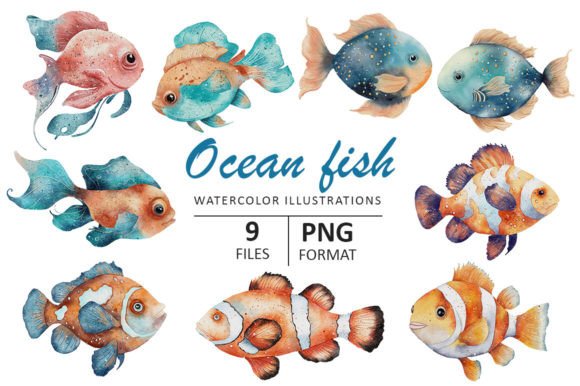
When you acquire a premium design asset, taking a moment to explore its full potential is worthwhile. Review all the included elements—in this case, eight distinct cute fish illustrations. Consider how their different shapes and poses can be used to create movement and flow in a layout. A fish pointing toward your call-to-action button can subtly guide a viewer's eye. A scattering of smaller fish can create a beautiful, textured background pattern.
Always test your designs in context. Place your logo mockup on a business card template. View your social media graphic on a phone screen to ensure the details are clear. Print a test page of your invitation to check color fidelity. This practical testing phase is where good design becomes great design, ensuring your final product is not just beautiful but also functional and effective.
Finally, understanding the licensing that accompanies such assets is a professional necessity. Ensure the license permits commercial use if you plan to use the designs in client work or for products you sell. This due diligence protects you and your clients, allowing you to create with confidence and integrity.
In the end, tools like these watercolor fish are more than just decorative elements; they are bridges to more expressive, engaging, and professional design. They save countless hours of creation time while offering a level of artistry that is difficult to achieve from scratch. By thoughtfully integrating them into your workflow, you can elevate your projects, strengthen your brand’s visual identity, and connect with your audience on a more human, artistic level. Dive in, experiment, and let the fluid beauty of the ocean inspire your next masterpiece.